
The Interview: How We Ask Shapes What We Learn
Why the interview matters so much
When people picture a school misconduct investigation, they often imagine stacks of documents, email searches, and policy binders. Those things matter. But in our experience, the outcome of an investigation is shaped most by something much more human: the conversations we have with the people involved.
A well-conducted interview can bring out the truth gently and clearly. A rushed or poorly framed one can confuse a child, discourage a witness, or create holes that no amount of paperwork can fill later. That’s why the way an interview is conducted matters so much.
How the question shapes the answer
Children can be accurate, reliable witnesses about their own experiences. They are also especially sensitive to how adults ask them things. A child may try to give the answer they think a grown-up wants or go along with a detail suggested in the question, simply because an adult said it.
Consider the difference between these two questions:
"Did he touch you on the arm?"
"Tell me everything that happened, from the beginning."
The first one plants a detail and invites a yes or no. The second lets the child tell their story in their own words. Research on child interviewing has consistently found that open-ended prompts like this produce more accurate and more complete accounts.
The same care applies to tone and reaction. If an interviewer looks shocked, praises certain answers, or repeats a question several times, a child may start to wonder whether their first answer was "wrong." Good interviewers stay calm, neutral, and patient.
What trauma-informed interviewing looks like
"Trauma-informed" gets used a lot, so it's worth saying plainly what it means in practice. It means understanding that a person who has been through something scary may not remember or tell it in a neat, linear way, and designing the interview around that reality.
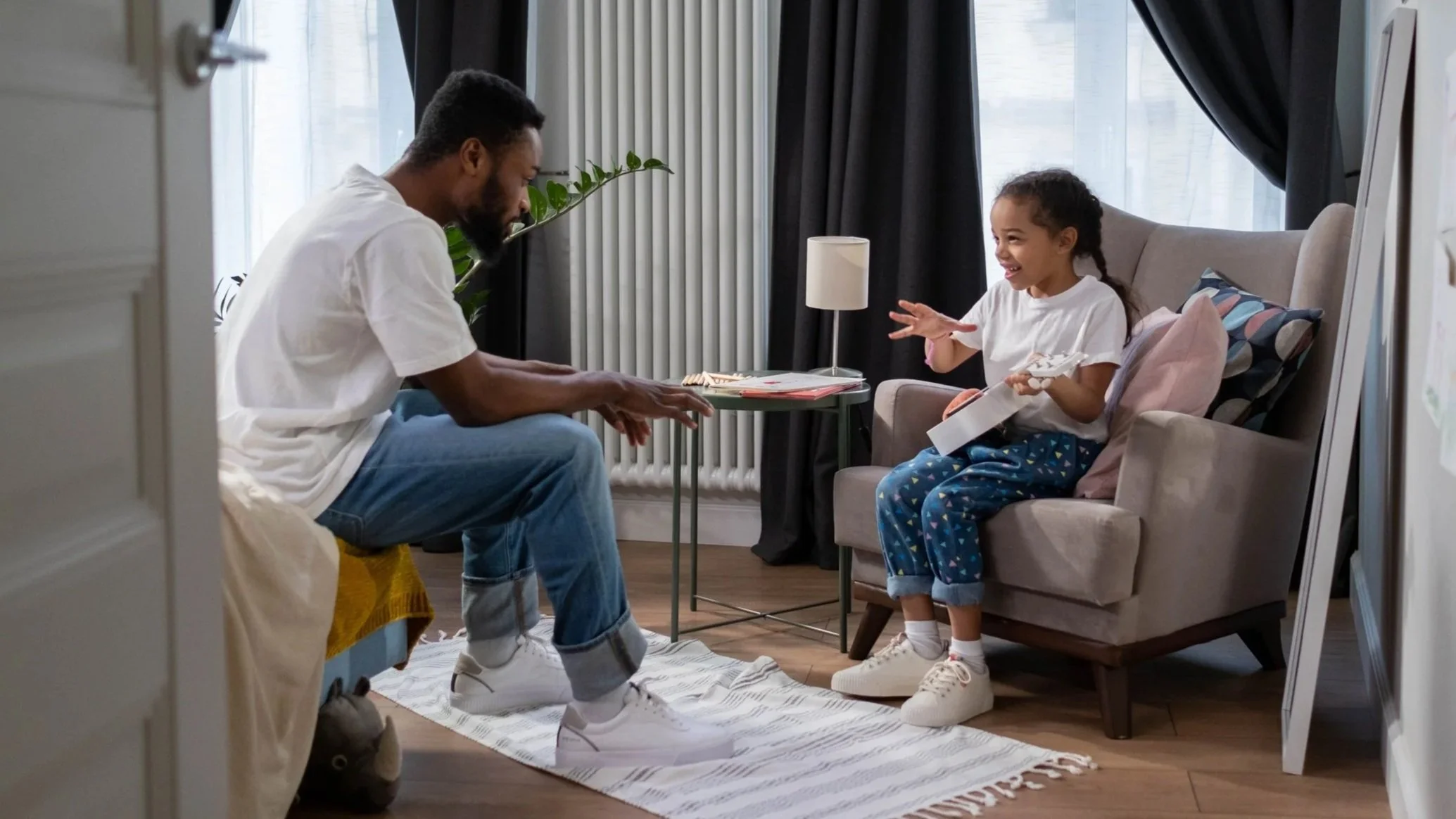
In our work, that looks like:
Setting the stage. Explaining who we are, why we're talking, and that it's okay to say "I don't know" or "I don't understand."
Building rapport first. Starting with easy, neutral conversation so the person can settle in before anything difficult comes up.
Letting them lead. Asking open-ended questions and following up on what they've shared, rather than steering toward what we expect to hear.
Respecting pace and comfort. Offering breaks, choosing a quiet and private space, and never pushing past what someone is ready to share.
Not reading too much into demeanor. Some people cry, some laugh nervously, some seem flat. None of those reactions on their own tell us whether someone is being truthful.
None of this makes an interview less rigorous. It makes it more reliable, because people share more fully and accurately when they feel safe.
Fewer interviews, better coordination
One of the kindest things a school can do for a child is avoid making them tell their story over and over. Every retelling can be hard on the child, and multiple interviews by different adults can also introduce inconsistencies that later get mistaken for unreliability.
When there's a possibility of criminal conduct, law enforcement and child protective services may be involved, and a child may already have had a forensic interview at a Children's Advocacy Center. In those situations, a school's own investigation should coordinate with those agencies rather than run ahead of them. That can mean waiting before interviewing a student, relying on information that's appropriately shared, or carefully limiting the scope of any school-based conversation.
Getting this sequencing right protects the child, protects the integrity of any criminal case, and protects the school's own process.
Interviewing adults matters too
The same principles are carried over when we talk with teachers, staff, parents, and the person accused. Adults can also be anxious, protective of colleagues, or worried about their jobs. A fair, respectful, neutral approach helps everyone speak more openly.
Fairness to the accused employee is part of this. They deserve a clear explanation of the process, a real opportunity to respond, and an interviewer who hasn't already made up their mind. A thorough, even-handed investigation is what allows the final findings to hold up, whatever they turn out to be.
We also pay close attention to the quieter witnesses: the aide who noticed a pattern or the colleague who felt uneasy but wasn't sure it was worth mentioning. Often the most important details come from people who didn't realize what they'd seen until someone asked the right question.
The take away
If you're a school leader, the most helpful thing you can do when a concern comes in is resist the urge to start asking a child lots of questions yourself. Listen, make sure the child is safe, follow your reporting obligations, and bring in people trained to conduct these conversations well.
At Campus Integrity Group, careful, trauma-informed interviewing is at the heart of every investigation we conduct. If your school or organization would like to talk through how your current process handles interviews, we're always glad to have that conversation.
